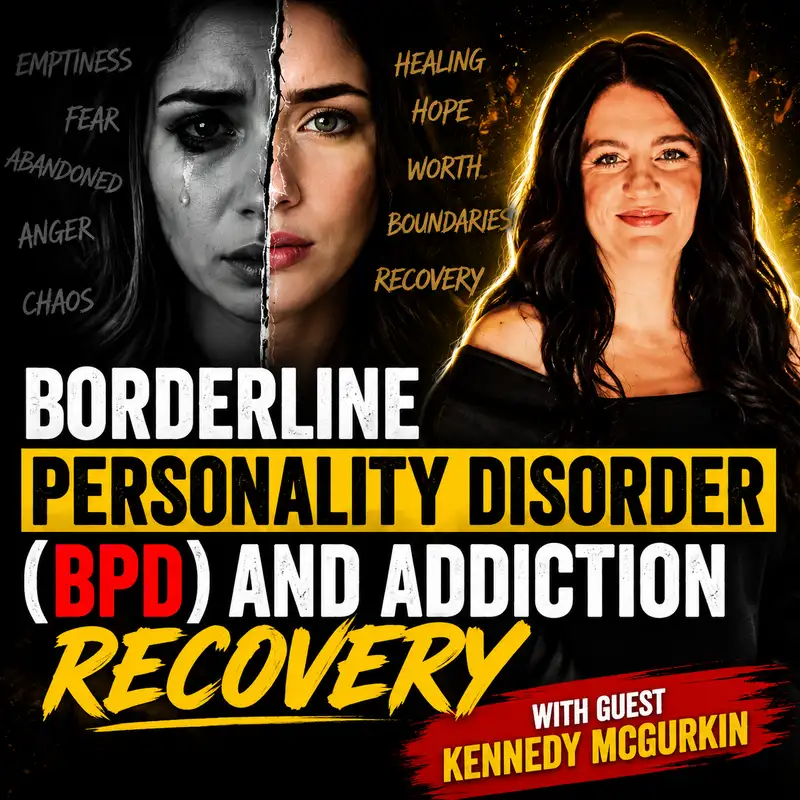
Borderline Personality Disorder (BPD) and Addiction Recovery with Guest Kennedy McGurkin
Download MP3You’re listening to the Recovered Life Show, the show that helps people in recovery live their best recovered lives. And here is your host, Damon Frank.
Damon Frank: And welcome back to the Recovered Life Show. So good to be with you here today. The Recovered Life community has been really focusing on co-occurring disorders in addiction recovery. And I'm so thrilled to bring on my next guest, and it's a familiar face, we've had her on before, Kennedy McGurkin from Returning to Self in Boise, Idaho. She's a therapist, and we're going to dive into this idea of BPD. What is BPD? How does this interact with addiction? And what do you do if you think you might have it, if you think you might be affected by it, or you have someone in your life that has a co-occurring disorder, they're fighting addiction, and they're also dealing with BPD?
So I'd like to welcome to the stage Kennedy McGurkin. How you doing, Kennedy?
Kennedy McGurkin: Good. How are you, Damon?
Damon Frank: Oh, I'm doing I'm doing so well. Thank you so much for coming on today on the Recovered Life Show. It's good to see you, and you're in Boise, Idaho. You're a therapist, and BPD, I got I got to tell you, not many people want to talk about this in addiction recovery. Not not many people want to.
Kennedy McGurkin: No.
Damon Frank: Why is that?
Kennedy McGurkin: I think BPD is the most un- a lot of people don't know BPD to its extent because they're still coming out with a lot of research about it. We're still learning a lot about the diagnosis itself. At first, it was just a woman's diagnosis. Now we're realizing women and men can both struggle with BPD, and there is a lot of unknowns about this specific diagnosis. And I think that's what makes the stigma so big, but also it's scary, right? Because we don't know a lot about it. Like if it was anxiety or depression, we've been studying that for years, where BPD is now just kind of getting the stage that it deserves. Um, and I think coming on these podcasts or talking about it can really help kind of deconstruct the stigma against it and really spread knowledge about what it actually is and how to help, right?
Damon Frank: Exactly. Now a lot of people, when I first heard BPD, I was thinking, "Oh, bipolar," but it's not bipolar. It's called Borderline Personality Disorder. Can you Can you talk about exactly what is Borderline Personality Disorder?
Kennedy McGurkin: Yeah. So BPD um is basically the fear of abandonment, or it's there's a lot of factors that go into BPD. Um one of them is being very extreme emotions. So, for example, where someone who doesn't have BPD might feel sadness, someone who does feel BPD, oh sorry, someone who feels BPD, someone who has BPD feels sad, they will feel rage, they'll feel these very big, huge emotions, and they'll feel very alone in those emotions. Um disconnecting from self, depersonalization, derealization, self-harm is a huge part of BPD, suicidal ideation. Um yeah, the number one thing is really just the fear of abandonment and then actively avoiding and choosing things to avoid that abandonment that they're feeling.
Damon Frank: Can Can we talk a little bit about this sense of abandonment? Because this this was confusing to me when I first heard this. And I think no one wants to be abandoned. No one wants to have the fear of abandonment, right? That's a human condition. Right. Right. But But it's not really with people that have Borderline Personality Disorder. It's not that they just fear that they're going to be It drives them, right? Everything they do is based on not being abandoned. Is Is that correct?
Kennedy McGurkin: Correct. That's something that I talk a lot to my clients about is the fear of abandonment and the extent of what that means to someone with BPD. I had a client describe it to me in a way that I will never forget. Um they said they felt like their whole entire life, if you picture like in those um end of end of the world movies, right? They have like a crack that goes down the middle of a city, and they're here, and their loved ones and everyone else is over here, and they are alone in their journey, they're alone in their thoughts. They feel a deep sense of loneliness, and that does drive a lot of their actions, the way they behave, um that's why DBT is like the number one therapy used to treat um BPD is because it's a lot of relearning behaviors and relearning thought problems in order to retrain your brain that you are not alone. And just because you had an experience or a really bad childhood or whatever it was that kind of inflamed the BPD, you're kind of just retraining yourself to be like, "This is not this is not real. This is not how I want to continue to live, and this is what I'm going to do to fix that."
Damon Frank: You know, I first start I first saw this, and and I think the this idea that you're saying that it was primarily diagnosed to women, right, that would have BPD. And um I first saw this in 12-step groups where I would see people come into 12-step groups, and they would be they would have a harder time We were talking about controlling our emotions. We were talking about just basic things, right? Um and you would see people come in, and you would see them struggle with that. Everybody struggles with, "Oh, looking at being the observer. This is my emotions, and do I have to react?" I would see that the people, there were certain people that had a lot of drama. There was a lot of flying monkeys around. There was a lot of they they could they could they were like trapped in it, and no matter what happened, right? And you would see them go in and out because what I learned is alcohol is one of the one of the symptoms of alcohol and drugs is one of the symptoms of BPD, that people will overuse them to self-medicate. And I would see this going back and forth. Can we Can we talk about the emotional state here? Because I think it's very challenging. Because when we're saying, "Don't listen to the alcoholic thinking," like when I do TikTok lives or coaching sometimes, I'm like, "Don't listen to the alcoholic thinking. Let's watch it." People with BPD, I noticed, when I worked with them, they have a very hard time separating what they're looking at and reality, right? Like, it it's even tougher for them.
Kennedy McGurkin: Totally. Yeah, I think too, when we say like, "Don't" it it would be like telling a kid like, "Stop screaming, like stop throwing the temper tantrum. It's not a big deal." To the kid, it's a huge deal, right? To someone with BPD, that that emotion is so big and such a wave that feels huge. Like, this is not, "I'm sad, I'm going to drink." It's, "I am devastated. This is the end of my world. I'm going to drink." Or we see the rebound of it, right, of, "I'm the happiest I've ever been. I'm doing the best. Like, I'm amazing. I'm doing things," and then something triggers it, and then we start seeing alcohol use to self-medicate, like you said. Or that is a form of self-harm for someone with BPD a lot of the time is choosing drugs and alcohol to self-harm themselves. It's not just cutting or it's not just, you know, suicide attempts. There are choosing the wrong partners, having really reckless sex and not choosing to protect yourself or, you know, that's a very big thing is the emotions are if you feel sadness as someone without BPD, picture it times a million, and that is with someone who lives with BPD every day. That is the rollercoaster they're on, right? It's not a normal, I hate saying that word, but a normal experience. It is an huge It's like under a magnifying glass.
Damon Frank: Yeah, and you know, um can we talk about men a little bit, too? Because I think this is stereotyped to women, and I know it it it appears differently with men sometimes than it does with women. Can we talk about that, too? Like, can men have BPD? And what does that look like in men that differs from women?
Kennedy McGurkin): It looks very similar, honestly. Like once you know the BPD diagnosis, it looks it presents very similarly in men vs women. Women in our society just get this, "We are emotional beings. We are, you know, we're labeled as all these things," where when men are, it's kind of it's they're otherized or it doesn't really make sense. Like, for example, someone with a male with BPD might be diagnosed with anger issues when really it's a BPD diagnosis, right? Because the rage and the deep anger they're feeling is kind of like that, like deep emotional feeling that I've been talking about, and also the fear of abandonment, right? If that fear of abandonment or that feel of otherization or loneliness is so big and controls their life, that again would be more towards the BPD skill. And like I said, even to this day, it's really sometimes tough for men to get that diagnosis because in our society, it's very women-based. But men can have it. I've seen men in my office have it. We work on the same things in DBT skills. It's just it's the same thing that we need to work on. It's just harder to catch because men are labeled differently than women when it comes to these things.
Damon Frank: Yes. And you know the interesting thing about this is I was just thinking about this when Kennedy, when you were you were talking about this, I was thinking, okay, this is this is even more of a challenge for people with BPD trying to get sober because we talk about community being one of the first steps after you surrender. Total. After you say, "I'm yielding, I'm going to surrender, I'm going to try a different way," we lean in on faith, we talk about this a lot, right? And now you have to plug into a community, and I it's it's funny that you said this with anger with with men, because I have seen it in addiction recovery is as they start to have a relationship with another guy who will tell them the truth and help them, they're all of a sudden will have rage and anger if they feel at all slighted or they're going to be cut out of the group or what and it's not even going on, it's just you might have sat in a different chair because somebody's in the right, and they're you could see there's a huge emotional turmoil going on. And I do I think you're right, guys express it a lot in anger and frustration and acting out because it's probably just more socially accepted that they would do that.
Kennedy McGurkin: Right. Yeah, and I think too, I always say this too, I work with a variety of age groups, but I always say it to no matter who comes in my office, right? Like, anger is a tree, we see the tree, we don't see the roots. So what's under the roots of rage and anger for a male who is struggling with BPD? Is it sadness? Is it the fear of abandonment? Is it, "I've never been loved"? Like, what are the core beliefs that are sitting on those roots of the tree, too? Like, "I will never you know, get over this," or, "I'll never be accepted." Or like you said, you just made something click for me, too, right? In recovery, community is number one. If you are constantly feeling isolated regardless of if you're using or not, that's going to be another burden, or not burden, but barrier that you have to go through in order to stay sober and to live a sober life, right? So I totally think that is I agree with you on that, and I think that's a beautiful point that you just made that I haven't really put together, so I love that.
Damon Frank: You know, it's what what is so what is so interesting about this is I look back over just either service work that I do now, like we're talking, or coaching people and helping them transition into a sober life. Right. And now starting to say, "Wait a second, maybe they were doing the work, and the communication needed to be different with them. Yes. There maybe needed to be more" like, the people that are around people who are suffering from BPD, the communication needs to be better. And almost I almost kind of what I'm hearing is is kind of more clarifying that they're not being abandoned. Is Is that the case? That they are safe where they're at. Yes. And to be very clear communicator about what you are communicating to them.
Kennedy McGurkin: Yes. 100%. That's what I was going to recommend too, when you are surrounded by someone like a loved one who has BPD and you are on the other side of it where you you don't have BPD but you love someone who does. Like, communication is key. They need reassurance of, "You're safe, I love you, I'm here. I need to take a step back when you're heightened," right, or whatever. And I think too, what you brought up is sobriety looks different for everyone, right? Throw in a mental health diagnosis on top of that, holy smokes, your journey looks way different from someone who might be struggling without BPD, right? And I think being trained and being knowledge knowledgeable about these topics, that can really help someone stay sober for a long time, or that can really hurt them, right, of being feeling otherized, feeling like, "I can't do this, I'm under- I'm misunderstood," etc, etc. So that totally changes the trajectory of someone's sobriety experience if they don't know, right? That's the main thing.
Damon Frank: You know, I I think it's important to know, and I think, you know, if you do service work or you work in a community, a lot of the times we just write people off as being difficult or not getting it, right? And and I and I've been that person, I'm going to be honest, I've been that person. I'm like, "Oh, this is just too difficult." Yes. "Like, this is a lot of heavy lifting." Yeah. Yeah, right? It's a lot, it's a lot of heavy lifting. I want to get Okay, Kennedy, when we come back, I want to dive into the solution because some people here might be saying, "Man, this is me. I have the this is me," or they know it's them. They've been diagnosed with with BPD, and I want to get into the solution. Can you recover from BPD? Can you have a normal life? Are you going to be able to stay sober and deal with your emotions? So when we come back, we're going to dive into that. We'll be back, guys, after this really quick break.
Damon Frank: And we're back. Uh, we're with guest therapist Kennedy McGurkin, and we're talking about Borderline Personality Disorder today. Um, I'm so glad to have her on. Before the break, we were really talking about, you know, what is this, how do you recognize it? And now we're going to dive into the solution here. So Kennedy, we've been talking a lot about this, and how do you know if people are thinking, "Wow, maybe this is why I'm going in and out. Maybe this is why maybe this is why people say, 'You're overreacting a lot,' or there's a lot of drama here," and this keeps and you're trying to let it go but you can't? Mhm. Maybe it is BPD. How do you find out for sure if you have BPD? Like, what what's the steps?
Kennedy McGurkin: So, they always tell us in grad school and in the field, "Do not self-diagnose." Please do not self-diagnose. Um, if you believe that you have BPD, see a trained professional, see a therapist, see a psychiatrist. Um, make sure you are getting quality mental healthcare in order to be properly diagnosed because once you have a label, you know what to do, right? If you don't have a label, you don't know. So, if you are thinking, "This is me, this describes my whole life," or, "Oh my gosh, this is my mom who I grew up with," or whatever it may be, go see a trained professional. Let them know your story, let them know your symptoms you're experiencing, your goals, and the way to treat BPD is it's long-term, there is no quick fix. If you are really, really struggling, there is medication, but a pill will not fix the long-term behavioral change that needs to be done in therapy. Um, therapy is amazing for BPD. There is so much research behind talk therapy, but specifically um DBT therapy that was designed to specifically help people struggling with BPD.
Damon Frank: Yeah, and I you know, we're going to, you know, we'll have you back and we're going to do even more on that because I think that that uh DBT is amazing, the process of that, and it's just it's it's so helpful in in getting, you know, in really identifying these behavior patterns and being able to kind of step in and uh, you know, really have some positive change in your life. So, I'm going to ask the magic question here um this thing with addiction. I hear this a lot, and people will come on our TikTok lives and they'll say, "Hey, you know, I have I you know, I'm borderline, and I'm trying to get sober, and I'm trying to work on my borderline, but I'm not going to really get sober because I'm not really ready." And you know, a lot of the comments are like, "It's hard to work on a mental health issue when you're trapped in addiction because how much awareness can you have?" Especially if you're if you're an alcoholic, not a problem drinker, if you're an alcoholic and you're constantly having the phenomenon of craving, constantly sucked into the process of addiction, right? That cycle of addiction, how do you really do that? Right? How do you really So, isn't really the first step is also looking at your addictions as well, and saying, "I have to stop that because that's also messing with your feelings," right?
Kennedy McGurkin: Oh, yeah. Yeah, uh alcohol, any kind of substance will heighten, right? That's what drugs, a lot of drugs do, is they heighten emotions and feelings. If you already have BPD and you're struggling with it, if you go on a bender and then you try and get clean and sober, you are going to feel those emotions even stronger than you already do, and that can cause a lot of distress, that can really cause a lot of self-harm ideations of, "Will I ever get out of this? Is it worth getting out of it? I can't handle this anymore," etc, etc. Um, so yeah, drugs and alcohol will 100% elevate the already um already like it's like coals to a fire, it'll ignite the fire that's already there if you have addiction on top of BPD, and it will just make those symptoms exaggerated even more.
Damon Frank: Yeah, and I you know, and I've mhm I've seen that. And you know, it's it's sad because you know, we we did an episode uh with a guy named uh Cecil, who is an amazing person, and he has suffered from schizophrenia and addiction. And he's sober long-term like, over 20 years. And you know, Kennedy, one of the things we were talking about is that he had to let go of some of the things that he was had learned with this old school uh AA group that he had, and that there were certain things that didn't quite fit, not the addiction part of it and the things to do with that, but some of the thing about like seeking help, that character defects, some of the things like that were very confusing to him. And we talked about this a lot of the times that with co-occurring disorders, sometimes there's two paths. You're recovering both at the same You have a program, let's say, for BPD, you have a program for your addiction. Mhm. And maybe a community with both, right? Like, you have to pursue a recovered life from BPD as well, it seems like.
Kennedy McGurkin: Totally. Yeah, I think to this is like a course of action. So, let's say someone would come in my office, they're struggling with BPD and high addiction, they would come see me for regular therapy, but I would also get them into a specific alcohol and drug treatment program—inpatient, outpatient, partial. Um, and then they would still see me weekly, right? Or two times a week because a lot is happening. You're processing through a lot when you admit to your addiction, you're admitting to you're admitting, right? And you're your gear is off, you're totally showing up as this raw, vulnerable person. That can cause a ton of grief work as well alongside of the addiction. Um, so yeah, I think that's just so important to make sure if you if you are struggling with an addiction that you are seeking specific therapy for that by a trained professional, and then also you can do talk therapy, too, alongside of that of, "Hey, this came up in, you know, my group when I was talking about my addiction, and then I want to process it a little more here of why I find myself in this cycle all the time."
Damon Frank: Yeah, you know, um what would you say the amount of people that come in that have borderline and have addiction problems? It's it's a lot, right? Like, a good percentage of people have addictions.
Kennedy McGurkin: Yeah, it's high, yeah. I would probably say 60% maybe, just from my clinical experience, um or they're recovering from an addiction that they are trying to be done with because they want to heal their spirit and their soul.
Damon Frank: Yeah, yeah. You know, I want to end this here with um the recovery path here because I I'm going to tell you, I I think BPD has a bigger stigma than alcoholism mhm and being a drug addict. I think when people hear the word borderline, that's it. Like, for a lot of because they've maybe had a family member that caused a lot of chaos, that wasn't like treated right. There's a lot of drama that goes along with with untreated BPD, I've noticed. Mhm. There's a lot of emotional draining, and is this, you know, and I know a lot of people are thinking it's like, "I can't do that. I'm already an alcoholic or an addict," and and you know, that's their own interpretation about what that means. It doesn't mean that to me, but a lot of people will say, "Oh, I'm already this. I now have to have this label. Well, that's it uh for me. There's no path of recovery now ever. I'm always going to be quote broken." And I say no one is broken. No. That I ever I'm sorry, I don't I don't permit that in the Recovered Life community. No one is broken. You have broken thinking, broken actions, mhm but you're not broken, right? Can we talk about this? Is this really possible to have an amazing life and have BPD?
Kennedy McGurkin: Yeah, 100%. 100%. Yeah, it's a lot of work. I'm not going to discredit that. It is a lot of heavy lifting. It is a lot. It's a lot, and um the typical like range of recovering from it, it's very it's varied, but it all depends on the individual. So, if you are willing to conquer this, if you want to be in therapy, if you want to work on that, you the more open you are to it and the more you accept it, the better it will be for you to move through it. If you are struggling, if you are resisting, it's going to take a while. It takes a while, but it is it's you can recover from it, and you can work through it, and you can learn how to identify it and be like, "Ooh, that's my BPD self showing up. Like, let's let's sit with them for a moment, and then let's move through it." Because when you're able to recognize and identify, you're able to change, and I think that's the most beautiful part of therapy. So, there's a high, high rate of recovery for BPD, and it just takes a lot of work. It's a lot easier said than done, but it can be done.
Damon Frank: I I love this, and you know, um I I'm so glad that you said that because I think there is already one of the things we're trying to do with Recovered Life is we're trying to stop this victim consciousness mhm that, "Okay, well, you know, I'm you know, I'm an addict, I'm an alcoholic, this is it, I'm broken," or whatever. This is the furthest from the truth, and you know, I find that people that have recovered from an addiction and do the work and stay in the work, right? And people who also on top of that have had some sort of other mental health issue that they're dealing with, or co- anxiety, anxiety, depression, totally um, you know, bipolar, BPD, any of this, they tend to be the more self-aware people mhm if they do the work, and I've heard it, people that have BPD say, "Oh, this happened to me today, and I realized that this was BPD thinking, Yeah. but this wasn't the true me," right? Just like they're doing with alcohol and drugs. It's like, "Yeah, it said to use, but you know, I was looking at that. That's not really what I want to do, I'm just frustrated." Right. You know? And and I love the fact that you say that there is healing that is possible for people, that this isn't a death sentence. If you have this, you can make it you can make it out of this and have your best recovered life.
Kennedy McGurkin: Totally. Yeah.
Damon Frank: So, final thoughts here, uh Kennedy. Um, if anybody's struggling with and they're like, "I'm afraid, I don't want to this is scary," what's your thoughts to them?
Kennedy McGurkin: That's okay, be scared and do it anyways. That's what I that's a mantra I say to myself, that's a mantra I always say to my clients, is you can be scared and show up. That's why we're here, right? It's scarier to do it alone than to do it with a therapist who will walk beside you and just help you through the big scariness of it because the scariness of it is the unknown. As soon as you're able to recognize it and be like, "Oh my gosh, that is my BPD, that's not me, I can do this," it becomes a lot less scary, and it becomes a lot less scary when you remove stigma from the society that we have picked up along the way, and you recognize BPD for what it is. And that is the most beautiful part of therapy is giving a little bit of the scariness to the therapist who can take it for you. So, love this, love this.
Damon Frank: Thank you so much for coming on the show, guys. We are going to two things I want to let you know. One, we're going to put links on how to get ahold of Kennedy there and contact her. And for Recovered Life Plus subscribers, if you are supporting the mission of Recovered Life either on TikTok as a subscriber or on Recovered Life TV, we're going to be doing an after-the-show with her right now. So, she's going to hold the line after the break. And you will have access to that as a Recovered Life Plus subscriber. So, hold tight because we're going to go even deeper in that conversation. Thanks so much for coming on the show today, Kennedy.
Kennedy McGurkin: Thank you.
Creators and Guests