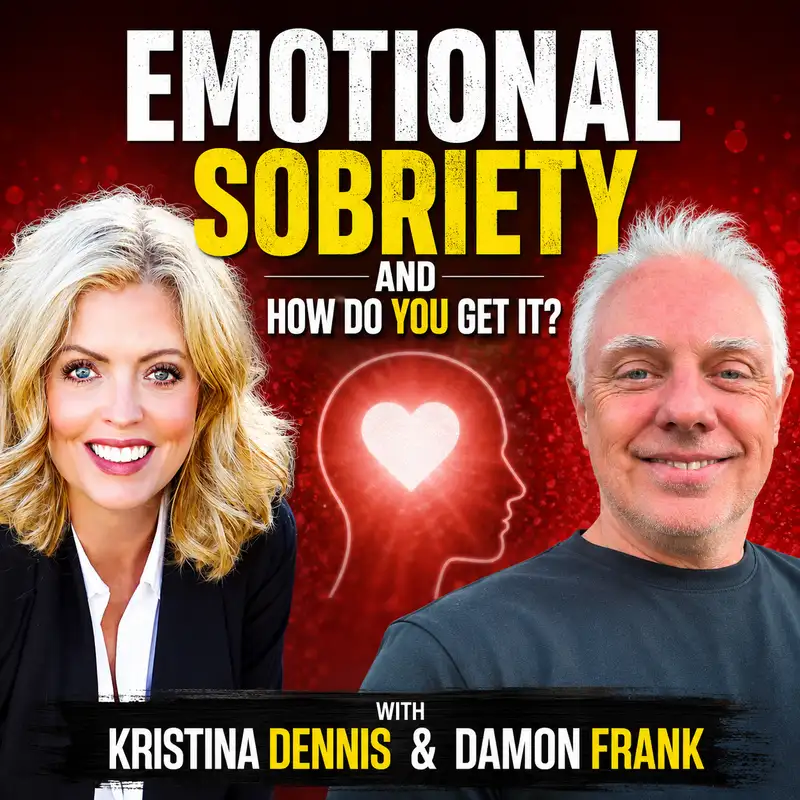
Emotional sobriety and how you get it?
Download MP3Here is the fully polished transcript with timestamp markers and properly attributed speaker names:
---
**[00:00:00] Kristina Dennis:** ...and it's a miserable life. It's a miserable life. And that is that resistance—living your life in resistance. Things are not supposed to be the way they are today. And, again, it's a spectrum, because there's definitely a space for true grief and frustration, and we're all going to have trauma responses that we need to work on. But ultimately, believing that the things that are happening in life are happening to you and not for you leaves you to a life of pain and, you know, frustration.
**[00:00:22] Announcer:** You're listening to The Recovered Life Show, the show that helps people in recovery live their best recovered lives. And here is your host, Damon Frank.
**[00:00:32] Damon Frank:** And welcome back to The Recovered Life Show. It is Monday with Kristina and Damon. How you doing, Kristina?
**[00:00:36] Kristina Dennis:** I'm doing really well, Damon Frank. How are you?
**[00:00:39] Damon Frank:** I am doing great. Happy Monday to you. Our favorite day in Recovered Life is Monday because we get to start it all over again. We get to do it all over again.
**[00:00:46] Kristina Dennis:** It is, it is. I love Mondays! We, you know, we do our breakthrough, break, uh, you know, our check-in space on Recovered Life, and it's just such a good day. It's such a good day.
**[00:00:54] Damon Frank:** Absolutely, it is. Everybody who's following along in the podcast, Monday, February 6th, 2023. Uh, we've got a great topic. You know, you and I were—this show's more about just you and I chatting about what's going on in our own lives and about subjects that we hear on the Recovered Life that we want to kind of go a little bit deeper on, but whatever forum we can't. Uh, for all of those who listen to us on Clubhouse and enjoy that conversation, an hour after this goes live on Monday, uh, welcome. I'm glad that you made it here. It's kind of a good prep for our Clubhouse room that we do on Monday. But we're talking today about emotional sobriety. We hear about that a lot. What is emotional sobriety, and how do you get it, Kristina? Go ahead, answer that in one sentence.
**[00:01:29] Kristina Dennis:** No, that is impossible. But you know, I think that it's important to explain what emotional sobriety means, at least to me. And, you know, I—it occurred to me in my early sobriety, too. Uh, we know in recovery that when we are drinking, when we're abusing a substance, we are not growing emotionally. We're not processing emotions. It's one of the reasons why alcohol is such an effective way to detach. And so, uh, a lot of people will get through the physical sobriety and, you know, there's this certain amount of time that there's a lot of insulated, you know, excitement over the fact that it's gone. And then after that kind of dies down, we still have those emotional uh, you know, challenges to process. We still may not have the skills and the ability to operate in the world, to regulate our own emotions. You know, and we all know those people that struggle with regulating and they pop off. And so emotional sobriety is also about that. It's about how we operate in this world and what kind of uh, how we show up as a person.
**[00:02:37] Damon Frank:** Yeah, yeah. It's a—it's an interesting topic. I think it is the um, it's kind of the Valhalla of recovery, right? Like people always like, "Well, you know, you're sober, but you don't have emotional sobriety. You know, emotional recovery. You don't have this, you don't have that." You know, people talk about it a lot. Um, and I think one of the things that when we were doing this, I said, "You know, hey Kristina, I think we need to kind of discuss, you know, what is emotional sobriety first, right? Because I think a lot of people think, 'Well, I don't have it,' but they don't—they don't really know what it is." So I'm glad that you did a—I'm glad that you did a little uh, a prep on that. You know, I—I'm very big at saying like 12-step groups are a great way to be able to get you to neutral. Right?
**[00:03:19] Kristina Dennis:** Yes.
**[00:03:20] Damon Frank:** And I think we—we talk about these in 12-step groups a lot. We talk about emotional recovery in 12-step groups a lot because once people hit that neutrality—meaning when they first come in, they can't really, right? Like they can't really get there. They can't be emotionally even, necessarily, and look at things objectively. But, you know, I think one of the really benefits of the 12 steps is it does take you through this kind of spiritual transformation situation, this awakening, so that you can look at your actions a little bit more objectively. So I think like if we were going to like really boil down what is it, I think that's really kind of the starting point to emotional sobriety. Wouldn't you agree? I mean, that's where it starts to begin.
**[00:04:02] Kristina Dennis:** Yeah, yes! And I'm so glad that you opened it up because emotional sobriety to me means a much deeper uh, relationship with self. It means that we actually process emotions as they happen. We don't squash them. And uh, I think a lot of times uh, we can judge somebody's emotional sobriety on how well they are operating in the world. And everybody knows that, you know, you can be, you know, pleasant to be around and be a raging codependent. So I think it's a much bigger, individualized discussion about who are, you know, who—what is our value system and how do we live within that value system? Do we clean up messes with other people? Do we take care of ourselves? Emotional sobriety could be emotional maturity, too, for me. You know, it wouldn't just be about our behavior.
**[00:04:54] Damon Frank:** Yeah. Yeah, that—that is kind of it. You know, I mean, because let's—let's—let's be honest, like first of all, I think emotional sobriety, emotional recovery is kind of on a spectrum. Right? I don't think anybody's like, "I've got it!" It's kind of like the mumps or something. It's not like you all of a sudden, "I've got it," right?
**[00:05:09] Kristina Dennis:** No.
**[00:05:10] Damon Frank:** So I think it's much more of something where it's more of an unfolding, which we talk about here on The Recovered Life Show a lot, about, you know, um, becoming more and more and more comfortable with the emotions that you're feeling in early recovery. More and more and more comfortable with um, your response to things. I mean, it's easier almost to describe what emotional recovery is not...
**[00:05:32] Kristina Dennis:** Yes.
**[00:05:33] Damon Frank:** ...as opposed to what it is sometimes. Like, and I can give you the what's not, like always acting out on emotions, always putting your emotions first before you, you know, the whole check yourself before you wreck yourself thing, right? Like, I think that's a big sign. Like when I see people that I'm coaching or whatever, and they say, "Hey, I've got really good emotional recovery," but a-a-uh like, ge- five seconds to wait to turn into the store, they're freaking out and yelling out the window, screaming at people, right? In traffic. That's a pretty good sign that you're not maintaining a healthy balance of emotional sobriety.
**[00:06:05] Kristina Dennis:** Totally, totally! And it takes work. It is about growing up and-and maturing. And you know, I, I love that we—that's even easier to see. We still have those other kinds of magical thinking that we can hold on to in recovery. And, you know, really it comes down to it—and I even hate to say this because I hated it when people would say something to me—it comes down to accepting life on life's terms. But, and, taking action where we can make changes. So it's one of those like you said, it's a process. Uh, one of the bigger lessons that I've been learning in the last five years is that there is not a—it's not a video game. We don't get to the highest level. Like, every time we are able to accept something and put our needs first and take care of ourselves and be good human beings, there will come another spot in which we have to elevate. So it's really good to know that there's no finish line.
**[00:07:01] Damon Frank:** Well, if I can't get to the next level of this, I'm not going to play. I will tell you this much, if I can't win. That might be some emotional recovery right there, right? Yeah, but you know, I think the key is because I've had a lot of people ask me, it's like they realize they don't have emotional sobriety because of their actions, right? Like, the thing is, is I always heard like you can get sober, you can be a drunk, get sober. You could be a codependent, you could be in codependent material, you know, codependent activity 24/7. But just because you get sober doesn't mean that all the other stuff's going to be fixed about the character that you have or the way in which you respond to people. Like I always said, you know, I-I-I heard this very early on: a horse thief, a drunk and a horse thief walk into a meeting. The-the drunk can get sober, but they're still a horse thief, right? Like,
**[00:07:44] Kristina Dennis:** Yeah.
**[00:07:45] Damon Frank:** And-and that is what you find. So like, you find different levels of this. I think—I think personally, this is—this is what I've seen. And let's really cut down to like: the people who are seeking emotional sobriety, get it. The people who don't seek emotional sobriety end up having chaos in their life.
**[00:07:59] Kristina Dennis:** Right.
**[00:08:00] Damon Frank:** And I see go out much more often...
**[00:08:02] Kristina Dennis:** Mhm.
**[00:08:03] Damon Frank:** ...than relapse, than people who are seeking the emotional sobriety. I mean, don't you see that? I mean, that's really my experience.
**[00:08:07] Kristina Dennis:** Oh, absolutely! And what—and it's a miserable life. It's a miserable life. And that is that resistance—living your life in resistance. Things are not supposed to be the way they are today. And, again, it's a spectrum, because there's definitely a space for true grief and frustration, and we're all going to have trauma responses that we need to work on. But ultimately, believing that the things that are happening in life are happening to you and not for you leaves you to a life of pain and, you know, frustration.
**[00:08:35] Damon Frank:** You know, that—you know, that is so interesting that you say this: "it's happening to you." Okay, that is something you hear a lot about. Like I will say, like I hear that a lot, especially with people that are new. "Why is this happening to me?" Right?
**[00:08:47] Kristina Dennis:** I said it a lot.
**[00:08:48] Damon Frank:** Yeah! Well, I still say it now. I mean, I said it the other—I said it right before this thing. It's like, "Oh, like, I had all these tech issues right before this thing," and I was like going, "I'm being plagued, like the tech issues somehow are coming after me because of the way that they don't like me." It's ridiculous, right? It's—it's the—it's like a—it's magical thinking to think that all of these things are coming at you. This is also, I think, I'm going to throw another one out there, Kristina.
**[00:09:12] Kristina Dennis:** Okay.
**[00:09:13] Damon Frank:** And this is a clear sign that you don't have emotional sobriety: when your—when your emotional state is constantly being altered by people, places, and things. Bam. I'm going to say it right there. I mean, don't you see that? Like, if people, places, and things can manipulate you so much, if traffic... excuse me, or, you know, um, a bill that comes that's $35 more than you expected, right? If that can wreck you...
**[00:09:37] Kristina Dennis:** Mhm.
**[00:09:38] Damon Frank:** ...it's a pretty clear sign that you don't have emotional sobriety.
**[00:09:41] Kristina Dennis:** Right, right. If you're not in charge and thinking on purpose. That's one of the things about, you know, uh, when working with a coach, uh, what we do on Recovered Life is that extra conversation. That's giving people the right tools and the ability to grow through things. We're not saying if something terrible happens to you, you're not allowed to have a reaction. What we're saying is that you don't go and cause harm to yourself and others with your reaction. You have the tools to live through it and see it. And um, you know, uh, pain is relative. Something that feels very, very painful for somebody might have been something I learned in the first grade. But it's still relative. And, I mean, that's why we have to keep having these conversations. That's why I love Recovered Life, because we do have these conversations about this. Uh, I needed tools. I was the biggest victim in the world and a legitimate, traumatic events happened to me. But, if I continue to stay in that mindset, I will be re-traumatizing myself, not the parents anymore. So, it's good.
**[00:10:43] Damon Frank:** I think a—I think one of the things, Kristina, that is a clear sign of a- of um, emotional recovery—like emotional sobriety and being able to have this—is having the appropriate emotional response for what's going on with you. That's where I started to kind of see it, I think, in recovery. It's like I- a small nickel thing would happen in my life, and I would play it out like it was $100,000, if you know what I mean. Right? Like,
**[00:11:06] Kristina Dennis:** Mhm.
**[00:11:07] Damon Frank:** ...it was just not a good—I didn't have the appropriate response to things. And then as I started to get sober—as I started to get more and more sober—and I started to do the work and I started to go through the twel- you know, especially for me it was the 12 steps, and then get coaching and therapy and all this other stuff, what ended up happening was I started to have different responses to things that were much more appropriate. If it was a nickel circumstance, I didn't spend $100,000 on it, if you know what I mean.
**[00:11:34] Kristina Dennis:** I know exactly what you're talking about. Yes, uh, it's—it's a very difficult process. You know, uh, when I work with people, there is a degree of, of grieving, you know, of actually uh, going through things. It's very interesting what we will do. We will deny something that really happened to us and hyper-focus on something that is maybe littler, or definitely littler, um, because we're still trying to deny what really happened to us. So it's a fine line. I think that um, that that's great for you. I know it certainly has been great for me. And I learned that from other people modeling, you know. They were so kind. They're like, "Yes, I'm sorry. Yes, that's not great." And then they would gently push back and say, "But you still have to uh, show up and have your life. Like, you still have to be an adult." You know, "You have the capability of being an adult," which was a really good thing for me to learn because I didn't know that I really I could handle these things. And just being given that permission and perspective that I would make it through, so helpful.
**[00:12:35] Damon Frank:** Well, they used to call these—I think the way in which that I got taught these em- emotional sobriety, I have to tell you, was I would have these severe reactions. I remember that I walked in once, and I saw some people that were helping me in the whole process of getting sober.
**[00:12:51] Kristina Dennis:** Mhm.
**[00:12:52] Damon Frank:** And I, something had happened to me, and it was so minor. I can't even remember what it was, like somebody said something at my job, or I couldn't do it. It was like a not a big deal thing. I had such this massive response to it, right? And um, the guy looked at me and said, "Hey, quality problem. Quality problem, quality problem." Like, "These are all quality problems. You shouldn't be having..." And I, you're right, it's the modeling. I saw other people how they reacted to stuff, and I said, "Hey, let me try that on." Because like, that's what I love about recovery and about Recovered Life, is I can try things on. It's like, "This doesn't fit me well. This fits me great." And what I did is I would try on other people's responses, honestly. I'd try on other people's responses, and I would say like, "You know what? Like I like how this person handled this."
**[00:13:38] Kristina Dennis:** Sure.
**[00:13:39] Damon Frank:** "How come this person's not so rattled?" And you know, and then on the flip side, like you were saying that people said, "Hey, this is a big deal." Like, "What you're going on right now is a big deal." And sometimes emotional sobriety is not responding to big deals in an appropriate way—the appropriate proportional response, right? No, hey, what you're going through here with your housing situation—because I had a major housing situation, I got sober in San Francisco in the middle of the whole tech boom thing, right?
**[00:14:05] Kristina Dennis:** Mhm.
**[00:14:06] Damon Frank:** It was a- it was a problem, right? Like, but it wasn't an unsolvable problem. And like, what I learned is like, "Hey, you know what? Um, I- I have options. They might not be the option I want. It might not be the option that's going to make me the most happy, but I do have options and I need to not act like I have zero options."
**[00:14:26] Kristina Dennis:** Right, right, because it's just taking you away from the solution and putting you in fear and causing more duress for your nervous system. Uh, you know, I think it's essential for people to do this part of recovery. Um, I- I know like both you and I went through the 12 steps and there are lots of options, we have great coaches on Recovered Life, lots of places. But don't short-change yourself because when we let go of our anesthesia, we are most likely very raw bundles, you know, bundled emotions and all kinds of things. So it's very normal to struggle with your reactions. It's very normal to not know exactly what to do. And having people around you to- to remind you, "Oh, this is a quality problem," or, you know, not say, "That's not a problem because this is what happened to me," but literally say, "I know of people who've lived through this, and these are some options you can take." Very, very helpful.
**[00:15:19] Damon Frank:** No, it is helpful. I think, you know, when we come back from this quick break, Kristina, you know what I want to do? I want to talk about steps people can take to get emotional recovery, because I think we talk about this a lot: "emotional sobriety, emotional sobriety, I have to have emotional sobriety." But people are like, "You know, there are books written about it, I know there are books, but there isn't really like a clear path about how somebody can start that, right?" So when I get- when we come back, uh, Kristina and I are going to share our tips that we've used for ourselves and help other people with, uh, to get that emotional sobriety. So we'll be back after this quick break.
---
**[00:16:03] Damon Frank:** And we're back. It is Monday with Kristina and Damon. I am joined with Kristina Dennis. We're talking about emotional sobriety, that- that whole—that whole thing, Kristina. Look, we're talking about what emotional sobriety isn't, what it is, you know, before the break. I want to dive in here, um, to how do you start to build emotional sobriety for yourself, because this is going to be the—this is the big question for people. They've maybe identified it's like, "Hey, I don't think I have this. I see it in other people." How do people go about getting this?
**[00:16:34] Kristina Dennis:** Right. Well, I mean, there's multiple ways. You, uh, my first introduction to emotional sobriety came from the 12 steps and the process of working the 12 steps. There are many, many ways to be able to get there. But you really do have to take the time to assess where your life is right now. Uh, for me and many of my clients, we do it through the lens of relationships. We do it through the lens of history, uh, learning things that have happened in our world, finding those belief systems that are continuing to keep us in a stuck place or, you know, nervous system on fire, uh, cleaning up all of the past wreckage that we need to do. I think that it's very natural for it to happen, um, when you are working with somebody else. Uh, some people do it with therapy only. I know, uh, with, uh, with my coaching practice and with other recovery coaches, uh, I've seen there's a serious compression of time for you to get there. And I think that uh, it can be as varied as people. Um, but first thing is you've got to take an honest look at you.
**[00:17:39] Damon Frank:** Yeah, no, I agree. I think, um, I think the—I think the personal assessment side of this is very, very important, right? Like you have to be able to objectively um, ask questions about yourself. And I'm—I'm going to share with you a tip here that I think really worked wonders for me. Um, a lot of the times, I think, we're confused in early recovery especially, and when I'm going to say early recovery, I'm talking the first three years. We're con- we're confused about kind of what we feel, what we think, and then what we do, right? And then how—and then how people perceive that, I think that's the other thing too, is like that's a component. And one of the things that I did, it was kind of a two-step program—and I learned this again through the 12 steps, and this wasn't a 12-step thing, it was just the people I was hanging around—the first thing was to ask other people their opinion about what they thought of situations and how I should respond. And this was key, Kristina, because um, it gave me a gauge. And I built up—and you know, people do this in business and I've done this in business before—but I built up a, I almost want to say an artificial intelligence, because that's hot right now, an AI train team of people that I kind of understood what their response would be because I modeled them. Right? I modeled them. So there were three people. One of the guys was Kevin. Shout out to Kevin because I know he listens to the podcast. I said, so when I then had a situation, I said, "Well, what would Kevin do in this situation?"
**[00:19:15] Kristina Dennis:** Mhm.
**[00:19:16] Damon Frank:** Right? "What would this person do," you know, "what would my friend Bob do in this situa- what would, like, how would they—how would they respond?" And that was a g- that was a gateway for me, honestly. That was a game changer because it gave me new ways to think about it. And then the only thing I needed to pick up was that pause button. Being able to hit the pause button before I did it, to be able to ask the question, "How should I react here, right? And what—" and it was interesting is when I tried on a couple of these, honestly, it wasn't normal at first. Like I remember like somebody yelled at me, and my response was basically to just go tell them what they should do with themselves. And I said, "Hey, what would Kevin do?" And he's like, "You know what? Uh, he'd chill a bit and then he'd like look at the perspective and said maybe the guy had a bad day. Is this really a pro- like, do I really need to hit hate with hate? Can't I just give this person a pass? People have given me a pass, why can't I go, right?" And what happened was is it star- certain things started just becoming comfortable for me. And I was like, "You know what? I just acted as if until it actually happened."
**[00:20:25] Kristina Dennis:** I love that. I love that. I same exact thing in my experience. And I've been told from the reverse side, right? I-I-H've had many, many clients and people who have, you know, interacted saying, all I thought of is what, what would Kristina do? And what would she say? And funny enough, sometimes uh, what Kristina would do was set a boundary and stand up for herself. So it isn't always about um, accepting bad behavior from other people. It's about having that courage and believing um, that I'm worthy. And we get that from other people in recovery, I believe. That's the first place, at least for me in my experience, you know, 25 years, that was the first place that actually somebody seemed to A, understand the things I did, and then also explain to me, you know, or share with me the different solutions. Because I was in a miserable place. I didn't know how to help myself. I didn't know how to live the life that I had gotten myself into without the booze. And, you take the booze away, I still had to live my life. So, emotional sobriety was uh, was nothing I could avoid. I had to do it.
**[00:21:38] Damon Frank:** And this is why I also believe, too, Kristina, is that uh, I don't think people just like... "I have emotional sobriety."
**[00:21:44] Kristina Dennis:** No!
**[00:21:45] Damon Frank:** You—you know, and this is—and this is the myth behind it. I think there's a lot of myth between that there's a group of people that you hang out with, they all have emotional sobriety, and there's a group of people that don't have emotional sobriety. Look, I know people who have—I have varying degrees of emotional sobriety regarding certain things. Like, and I have friends that do as well. Like, I have friends like on the—that on the friendship and personal relationship are a 10 at emotional sobriety, but on the money perspective, are a 2.
**[00:22:15] Kristina Dennis:** Right.
**[00:22:16] Damon Frank:** Right? Like, so, you know, I think everybody, I always say, like one of the reasons why I found it Recovered Life is because everybody's recovering from something, right? And a lot of the times, we've got to recover from ourselves, our own thinking, I found. It's our thinking that is causing—and that I think is the big thing is like what you really want to see with emotional sobriety is you want to see over a period of time, your thinking and reactions change to things. The initial thing—and I- and- and it has for me. I mean, it wanes back and forth, right? Like, patience is not something that I'm huge with, and I've had to kind of say, "Okay, look, people are doing what they're doing. Um, they're not thinking about me in traffic. Uh, leave earlier if that's a..." That's something you can control. Like, you're, you know, this isn't an overreaction to what's actually going on. You're 5 minutes late to the grocery store. No one's meeting you there. No one's going to die, you know what I mean? Like, chill out. Like, it's like you have to practice emotional sobriety. It's not like you obtain it and then you've got it forever.
**[00:23:17] Kristina Dennis:** Right. And I think you're really specifically talking about the language and the communication process and how we are communicating with ourselves. You know, we talk to ourselves all day long and uh, this is around taking agency of your thoughts and taking that responsibility for directing your thinking. I mean, all of it returns power to us and helps us separate from our ego, from our reactions, from what, you know, the world is saying uh, that we should do. And it is a spectrum. And I do believe sometimes, and this was my experience uh, in uh, 12 steps, and I've heard from others, that there was this idea that if they finished them, then they had arrived. And, you know, of course, uh, we want people to finish them. You know, we're encouraged to finish them. I think that's a great thing. But understanding that we're going to have to go back and study this area. You know, when I undid—when I started uh, when I stopped drinking and started living life without anesthesia, that is when those areas showed up. And I would do really well in one area, and then I needed to go work on another area. And there's plenty of help in all of those.
**[00:24:25] Damon Frank:** Yeah, I mean, well, you know, where—where do you still feel that you're working on emotional sobriety in your life? Like, where— what—what are those areas? Like,
**[00:24:34] Kristina Dennis:** Absolutely. Um, for sure, uh, I had a instance uh, just 2 weeks ago where I got a switch in some prescription medication, and I didn't call the doctor to question it. And then, happened to be talking to them a week later and found out that was a mistake the pharmacist made. And so I'm looking at that saying, "Wow, I didn't put myself first. It was a simple phone call, but instead I went through 10 days of," you know, "serious physical ramifications from going off this medication." And so, I still can look at myself and realize, "Wow, I do not plan well. I-I do not always put my needs first. I need to work on that. I really need to work on that." And um, you know, uh, mindset over a lot of different things, getting caught up in relationship drama and forgetting that I volunteered to get caught up in it. Those are certainly things I need to over—, you know, continue to work on. How about you?
**[00:25:38] Damon Frank:** Love that. Love that. You know, yeah, I, okay, so relationship drama I gave up. I retired that. Not to say that I never get into it...
**[00:25:49] Kristina Dennis:** Mhm.
**[00:25:50] Damon Frank:** ...um, I'll get into it from a humor standpoint, and I can be sarcastic. Like, you know, I'll call it, "Ah, like!" Um, I'll like, from—from that, which is probably a character defect, right? Like, I'll—I'll say it right out front. Um, I don't do the emotion—I don't do the relationship drama anymore because I found it left me feeling emotionally hungover.
**[00:26:12] Kristina Dennis:** Sure.
**[00:26:13] Damon Frank:** And it was—it just got too painful for me where I just said, "You know what?" It was weird. I had this event, Kristina, that happened where I had a lot of it, and I just—I felt, you know what I'm talking about? Like, I just felt like crap. I felt like I was on a week bender, honestly, trying to recover—, and I wasn't, like. But I just—it doesn't make me feel—and so I just said, "You know what? Do I really care enough about this?" And I was like, "You know what came back is like a clear, I don't really care. I don't really—" Like, the core of me, like, I don't really care. So, a huge chunk of that came out. Now, again, I'm going to say, do I get sucked up into it? Yes, here and there. But I can let it go quicker. That—that—that's the key. I think for me, um, I still have, I said it before this—I said it before we went on air—like, I—I still have a little bit of the—the "oh, are people out to get me" kind of thing. "Why is this all happening to me?" Like, I still have some of that. Um, I rewrite it quickly. I do. I rewrite it quickly, right? So, I see it, but I've noticed something that's kind of interesting, and I don't know if this has happened with you: I see it and I st- and I pause sometimes in rewriting it because I just want to sit in it a little bit to entertain myself, you know what I mean? And then I'm like, "No, I'm—I'm jumping out of this. This isn't—this isn't—" I can only go so far with it.
**[00:27:35] Kristina Dennis:** Yes, detach, detach, detach. I think it's interesting that you shared that, because as you were sharing it, I was thinking about some of the—some of the hurdles of last year with my mother passing and our, you know, she had never wanted to be part of my life. And I was thinking about it, I had a little tinge, uh, that—, because we had to do some things more recently with her estate, a little tinge of falling back into that old family role of being rejected. And I kind of was beating myself up about it, like, "Oh, look at you participating." And so I think it's important for us to share that stuff, because sometimes we don't—sometimes events come to us. And it's important to remember that, "Oh, this is another thing that I need to settle and move forward."
**[00:28:22] Damon Frank:** Well, I do think that this is where, you know what's interesting? And this is the interview I did a couple years ago with Stacy Danford. This is where we separate trauma from emotional sobriety, character defects, is that I could have emotional sobriety but still get triggered by a trauma response. And as I'm being triggered, as it's happening to me, I can identify emotionally in a different place, like, "I shouldn't really be bothered about this. This is like so petty in the grand scheme of it. Like, why am I getting sucked up into that?" I can have the awareness at the same time while I'm getting sucked up into it, right? And I've—I've noticed that that is a really clear sign for me, personally. Obviously, everybody's got to get diagnosed and go through those proper channels with trauma, but those are the things, honestly, those are those trauma patterns kicking in. And, but, emotional sobriety helps break those trauma patterns because when I'm aware of what's actually going on, when I can see it, like I've been in a place where I've been outside my body watching me reacting to something, that—that's powerful. I know I'm on the way to healing because I can at least identify it.
**[00:29:32] Kristina Dennis:** Absolute— you definitely, yes, that's such a beautiful way to share about it. And I'm glad that we talked about the fact that we're not talking about being triggered from trauma. That's an entirely different uh, scenario than emotional sobriety, because emotional sobriety is recognizing that you're triggered. And there's no way to shut down that—, I mean, I will always have trauma responses, well, maybe, I don't know, I—I—I have done a ton of work and still have some trauma responses that show up. But I know that, yeah, but I know that it's not indicative of me.
**[00:30:16] Damon Frank:** I love that. I, you know what? Um, guys, we're going to write more about this at recoveredlife.us. Check it out. We're going to do more episodes about emotional sobriety, emotional recovery. Kristina, this has been a great conversation. Um, guys, catch us on our Recovered Life meetings. You can find out more about it at recoveredlife.us. Kristina, thanks so much.
**[00:30:37] Kristina Dennis:** Thank you. Bye.
**[00:30:38] Damon Frank:** Bye.
Creators and Guests