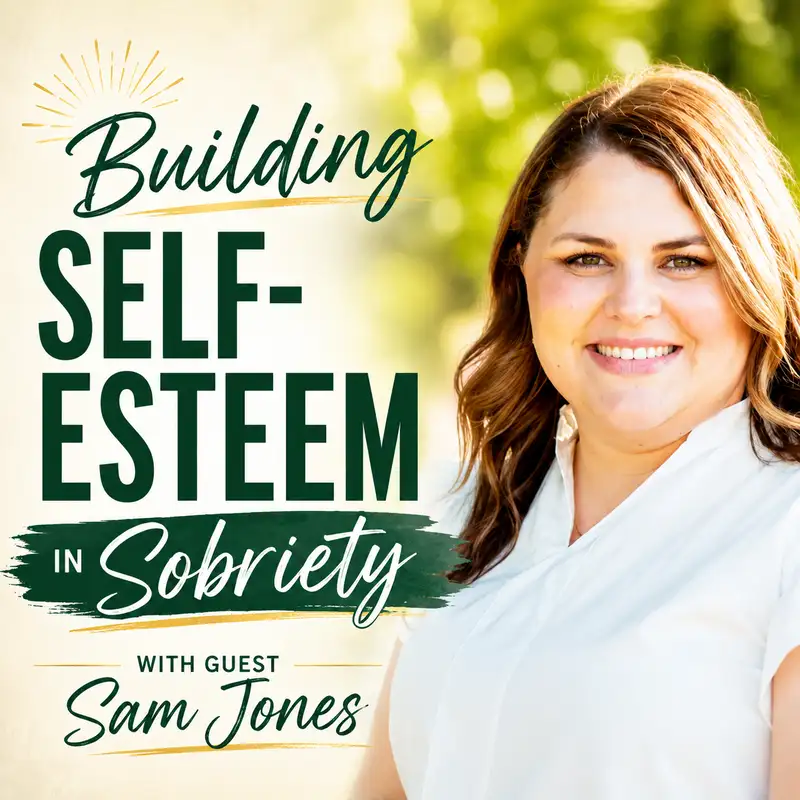
Building Self-Esteem in Sobriety with guest Sam Jones
Download MP3You're listening to the Recovered Life show.
The show that helps people in recovery
live their best recovered lives.
And here is your host, Damon Frank.
And welcome back to the Recovered Life show.
I'm pleased to introduce my guest today.
It's Sam Jones, who is a marriage and
family therapist based in Chicago.
Welcome to the show, Sam.
Thank you so much for having me. I'm excited.
I am thrilled that you are here. It's the first time
on the Recovered Life show for you,
so a big welcome from the Recovered Life community.
And uh, I you know what, we are we have an interesting topic
for today's show. You know, I guys, I wanted to do something
about self-esteem in the recovery process.
And I wanted to bring on a therapist like Sam,
who deals with people who are in recovery
and people not in recovery, right?
That talking about self-esteem because I think self-esteem
is such an important thing to get.
I think it's misunderstood a lot uh in recovery.
So I'm, Sam, I'm so glad that you're here uh
to talk about this to the Recovered Life community today.
Thank you. I'm excited to talk about self-esteem.
It's a huge topic about about the therapeutic process.
You know, let's dive into the whole self-esteem stuff.
You know, what is self-esteem because I think a lot of people
misunderstand. Self-esteem is ego.
They don't they don't know like is it ego or like what is self-esteem?
Yeah, that's a great question. So what I think of self-esteem,
I think of the the like the thoughts that we're having about ourselves, right?
You know, it's it's not so much ego but it's kind of like our
in some ways it's kind of like our inner critic, right?
Like or it could be like our inner, you know, best friend, right?
Depending on how what kind of level of self-esteem like you're kind of sitting with, right?
Um, so your inner critic can, you know, kind of show up as like,
you know, you're those inner thoughts that are just, you know, ooh, that wasn't, that didn't feel right
or oh, you you kind of screwed up there a little bit. Or, you know, it's a
oh, that felt a little a little uh tough but you you actually worked through that pretty well for yourself, right?
So I kind of think of it as like a spectrum of, you know, from going from it's but it's all these thoughts that you have about yourself.
It's thoughts about that you have about the way you look,
it's thoughts about the way that you um are perceived in the world.
Um, and it's sometimes it's impacted by the society that we live in,
it's it's impacted by it can be impacted by the society that we live in
or um you know just by your by your surroundings.
Um, but it really is just kind of like how you internalize all of that to like kind of think about yourself.
You know, it's interesting because when you say inner voice, right?
Um, one of the things in early recovery that you find is
the inner voice that's been talking to you saying hey, there's not a you don't have a problem here.
Everybody drinks like this.
Uh, if it's really these people that's the issue, it's not really
the it's not really an addiction. I could leave it at any time right?
You realize really quickly in early recovery that that has been a lie.
So I think, you know, right like that that inner voice,
you can't really trust that inner voice and matter of fact that inner voice is trying to kill you a lot of the times.
So I think it's hard for people to trust that inner voice
when it comes to their self-esteem because really early recovery
conditions you to kind of not take that inner voice so seriously or you end up drunk.
Yeah, sure. Absolutely. That would definitely make sense.
Um, and so then I think about it from when you're in recovery and maybe you're in that therapeutic sense, right?
If you're whether you're in therapy or in group therapy of some kind, it's,
you know, building on what do I know about myself to be to be true?
What do I know about myself to be um to be a lie?
To be um what do I like what what have I learned about myself through the recovery process
to kind of um kind of attack those lies a little bit, right?
Of that didn't seem to be, you know, the best way for me to go about that. Can I can I find something else?
Yeah, I I think one of the things that I found in my own recovery process was
was other people, you know, either having a sponsor, a therapist,
really probably a lot of different people honestly, friends,
that would actually tell you the truth. You know, we always say on the Recovered Life show,
one of the great things about recovery, if you're thinking if you're if you're if you're listening to this
and you're thinking about getting into recovery, you are going to find people are going to tell you the truth.
It might not be what you want to hear, but people are going to tell you the truth, right?
And I think that that's super important. You know, let's dive into a little bit about
symptoms of low self-esteem because I think like we said,
people are confused about what self-esteem is in general.
But how do you know if somebody has low, how do they know if they have low self-esteem if this actually could be one of the issues?
I think it probably comes a lot from um the words that they use about themselves.
Right? So, and it could be it could show up in personal, it could show up in work situations, right?
Um, oh, I I really screwed that up or oh, I'm so bad, right?
I'm so bad. I'm so dumb. I'm so this, I'm so that. Right?
Um, so using like the that kind of labeling language um really kind of
emphasizes it in your brain and in your mind of that kind of dynamic of,
ooh, I'm so bad, I did that so bad, right? I think of it as um,
I think that's one major um component of of having low self-esteem.
I think um another component of having low self-esteem is not really knowing or not being able to make,
you know, healthy choices for yourself, right? Whatever that looks like for you.
Um, so like not engaging in like, you know, movement or anything like that that could be that could prove to be like healthier for you.
Um, when I think of like what are the symptoms of low self-esteem those are the two things I think of the most.
You know, the negative self-talk I think is something that everybody has.
Like look, I I think negative self-talk is a human condition and I always say,
people are always recovering from something. Right? Everybody's recovering from something.
And this whole negative self-talk thing, um I think it's really a game changer.
You know, I you know I have dealt with a lot of people who in the recovery process Sam that are stuck, okay?
And they're stuck usually for a lot of different reasons, well two usually two reasons.
One is they have fear, right? But even if they're able to get past the fear,
they they have this negative self-talk and basically it all boils down to they're broken.
Right? Well they couldn't get that right, they ended up in they ended up sober.
They have no idea how they got there. You know it's a little bit mysterious,
why why we make the decision when we're gonna do it right? So your self-esteem is very, very rattled
and there is that demarcation line, Sam, where you have to say, you know I always found it's like,
okay I have to be accountable, I'm not broken, right? Like this this is the big thing like I tell people all the time it's like,
no, you're not broken. You made maybe you made bad decisions.
Yes, you can't drink like your fellows. But now you know, knowing's half the battle.
Right? You're not broken. It's like you have to pick yourself back up
and you have to move on with your life and you have to create the life that you know that you can have in recovery.
And it's gonna be way better. It's gonna be it's gonna be way better because you're in recovery.
Yeah, that's a really I think that's a really important part and I think about that
when I when I'm working with clients about this idea of healthy striving versus perfectionism, right?
So, you know, perfectionism I think is where we kind of get caught a lot of
I ha I in order for me to be successful, I have to do it this way.
And it has to be just right and I I can't make any sort of mistakes because otherwise then it's
it's kind of like that all or nothing thinking.
Whereas healthy striving is the the awareness of I know that I I don't always love myself, right?
I know that I don't always um talk talk well about myself. And I am working towards
becoming more kinder to myself, becoming more kinder to my body and the ways and the ways that I feed my body, right?
Um, and the people that I surround myself with to challenge myself to um
to to to bring myself awareness of other things around me that um that can help me grow.
Yeah, I think this all or nothing this black and white thinking, a lot of people in recovery have this.
I know I did. One of the hardest things for me to do has been like on the spiritual side of it
is really kind of let go, Sam. Because you know a lot of what you're talking about is
you know with the perfectionism is like I'm a horrible I have you know I realized like and I don't know if you've had this in your own personal life, right?
But the inner talk of the expectation that I have for myself
and also other people I've realized I've had to really re-gear that, right?
Like because the expectation is what kills me is like I have well it should be like that,
it should be like that. And what I end up doing is I should all over myself.
Yeah! Right! And then you know you get paralyzed and you're not you're not really working at the high performance level that you know you can.
Because you're you're stopping yourself with these expectations that are super unrealistic.
Yeah, definitely. And that's certainly something that I have to consistently work on myself.
Even though I'm a therapist, I still go to therapy myself, right?
Of working I I call myself like a recovering perfectionist, a recovering people pleaser.
Of um really kind of doing my own you know inventory if you will of like is
does the things that I'm is are the things that I'm engaging in things that I actually want to engage in
um or am I just doing it because I feel like I'm there's an expectation about me that I need to fulfill right now.
Um, and when I when I listen more to my own inner, you know, my inner thoughts and um
realize that I maybe I don't want to engage in something or I don't want to engage with someone,
the better I actually feel about myself and then I can trust myself to to make choices for myself that are more aligned with my values, you know, what I want out of my life.
You know, I it it's interesting that you say it like that because I
one of the realizations that I had, there's a guy who's been on the Recovered Life show a lot,
shout out to George, uh you know uh a fellow traveler with us and he and he's been on, he always talks you know whenever I every time I talk with with George,
when I say I'll make a statement about something right? And it's usually oh I'm disappointed that that didn't work out for me or I didn't do that the way that I wanted to, right?
Yeah. And he he always says he goes, well who who said it was supposed to be like that?
And you know and he basically trained me, you know Sam basically said you know
hey like I started to ask myself who is this person right?
That has this expectation because I'm not quite sure that that person's me.
I mean it's me, I'm not talking from a schizophrenic view here, right?
No! I'm talking I I I'm talking from like just a human view is like who who is who is this person because
this isn't necessarily who I am or what I believe.
And I and you know and I catch myself a lot doing that. I think everybody does but I now I see it in other people.
I'm like, well who said like I made this really bizarre statement the other day like um,
you know I consider myself a high performing person, I do a lot of stuff, I've got businesses, I've you know we've got the we've got the podcasts going, all this stuff
and uh you know sometimes I'll just say it's like ah you know I should have done this.
And then as an expert in that field I go, that is totally unrealistic. Like why would like I as even a professional wouldn't tell a client or anybody that it should be like that.
It's totally unrealistic. Who is this person that always talks to us about what it should be, how it's gonna be,
who who is this this voice that sets up this expectation?
Oof, that is a loaded question because and I know it's like I think it was rhetorical but I think I think it also leans into when I talk with a lot of my clients in therapy they're this idea this you know this person it should be this way.
And sometimes we find out it's you know it's a person that really impacted our lives whether that's a parent and I don't mean to you know by all by any means like blame parents right cause they only do what they can do.
Um uh but sometimes it's a parent, sometimes it's a like a past like you know coworker or some like someone who had or sometimes it's just society or the expectations of society right?
So it's it's it's interesting because we we know that it's ourselves right? Like we like we know that we're hearing that that's our voice,
but it can sometimes come from a lot of different places.
Yeah, and I think even beyond where it comes from, I mean I look I know certain things with myself and in life in general and just working with other people that
a lot of it is conditioning, it can be trauma, it could be a lot you know look it could be a lot of different like they're looking at trauma now with addiction as that being a linked component you know um
there there's a bit of a mystery behind all of it. You know I I always find that low self-esteem uh starts really in childhood right?
Like I I can see that because when you see when you it's interesting when you when you look back and you talk to somebody who has what I call chronic low self-esteem.
Yeah. They're they always tend to bring up traumas that they've had in the past to support the belief of why they should have low self self-esteem.
And it's I I find it I find it really interesting. It's it's it's almost like the committee that we talk about in addiction.
That committee that that comes together that says nah, you know this recovery process is BS and you know you are fine, it wasn't that bad, if you try again but do it this way, it'll be good right?
Like I find self-esteem has that uses that same committee Yes. Right? To come after you.
How do you combat that? Like you're getting this negative self-talk that's coming in, Sam, how do you just throw down the gauntlet and say okay no more of this negative self-talk.
What do you what do you do? What are the steps that you do?
So I often find with a lot of my clients that externalizing rather than keeping it inside, right?
So just keeping those thoughts in inwards, externalizing kind of helps us understand that that thought is real for them.
Right? That it actually exists, it doesn't just live in their brain that they kind of repeat to themselves.
So we talk a lot about what are the thoughts that you have about yourself and we we kind of go through some some fact checking right?
Um is is that true? Is that something that is uh justified or has evidence of right if we're thinking about um you know I if if this statement you know let's just say the statement is
I'm the worst friend in the world right? Let's just say that that's the statement.
Um I might ask my clients you know what are what do you think is the evidence to show that you are the worst friend in the world?
I I find that hard to hard to believe. And you know we'll talk through like all these fact-finding different uh statements or these questions to kind of just check in with ourselves and kind of understand where where is that coming from
and I find that externalizing that is really really helpful to get it out of the brain to make it real for for them and it really kind of helps them reframe like oh actually that doesn't seem to be very true because I have all this evidence that tells me that I'm not a bad friend.
I I show up when I and I show up for people and I check in with people and I um you know even if I can't physically be there with them I make sure to check in with them.
So I guess that's not really true right? So I guess like I think the more reframed version of that is that I am a friend that's doing the best that I can. Right?
Yeah, I love that. I love the whole thing about the thinking not being true.
You know it's interesting one of the crazy things about the recovery journey that I found is that as the years go on and the decades have gone on for me
and I see other people in recovery like coming in, one of the things that really shouts out to me is how much of my thinking isn't necessarily real.
Like right? Like there's intuition right? There's intuition and I and I and I've learned how to kind of differentiate the difference between oh well that's my ego,
okay that's low self-esteem, this is intuition right? Like I'm you know when you start to really listen like one of the things that I have in my spiritual practice this year in my recovery is to like really start listening to the signs that I'm I'm getting in life right?
To look around and see it I cause sometimes we're so busy doing stuff we don't stop and think about is that true is that not true?
And I like how you put that because I have found that um if you can get past your ego most of what we're thinking and like most of stuff the capacity that our brain is writing is just not even in reality.
It's just not even real and to free yourself from that I think is a game changer in recovery because what it allows you to do is really live an amazing life um because you're able to really let go of that.
Yeah and it takes a lot of vulnerability I can't underestimate like the vulnerability that it takes right even if you're externalizing with a friend right?
Hey when we were at that party like I think I made a real ass of myself or something like that you know?
And having that vulnerability to say that to someone you know whether it's a trusted friend whether it's like a you know a sibling or a parent or something like or a therapist right?
Um and just having that vulnerability to say that out loud can sometimes be the biggest hurdle to um to work to to take the thought out of your brain and into reality of
I think I really screwed up there and people can kind of like help you understand like well why do you think that? You know tell me about your thought process I'd like to hear that cause it didn't seem like that from that wasn't my experience of you I understand that it might be your experience but um tell me more about that I'd like to hear more about that.
And it can be a really vulnerable thing but once you actually physically sit down and do it you find that I have speaking from myself I have found that that is the biggest help to slashing almost all of my anxiety.
Almost all of it.
Yeah well look you know we we we had an episode uh several weeks ago with a therapist who suffered from you know mood disorders anxiety and depression and is also a therapist and it was great because we heard it even you know he has every tool in the world every degree in the world every resource in the world.
And he said you know look anxiety is a human condition depression is a human condition and for some people it's more right?
Like and I I I think a greater mental health uh discussion regarding self-esteem needs to happen because I have seen a lot of people get stuck
um simply because you know it's not a mood disorder it's not a behavior disorder it's not you know they're sober it's really simply self-talk.
It it really it really at the end of the day and you take those exact same people and you put them in a group in a surrounding that does that that feels that anything's possible that doesn't see them how they see themselves
that reminds them dude like you're my friend and I would you know I remember somebody saying I had some really negative self-talk about myself once and my friend turned around to me Sam and said you know look if you if you were telling if you were somebody else talking about you like that I would kick their ass.
Like that like that is not that's not acceptable like you know and it's interesting how much community plays a role I'd like to talk about that a little bit because yes how does community play a role?
Because if if you're listening to this and you're just a chronic self-es negative self-esteem junkie right?
And you're listening to this and you can't get out of it, it could be who you're around.
Could be. Yeah absolutely. I was actually I was just finishing up a book um about um about trauma from Dr. Bruce Perry and Oprah Winfrey, What Happened to You?
And um the the amount of individualism that is just that just exists in our society is ludicrous for me because all I think when we can truly connect with others that is part of the human that is the most important part of the human experience.
Is being able to connect with others that might maybe have different experiences maybe have similar experiences to us that we can learn from that we can help heal with that um we can just just have a conversation.
I think especially now that we have so much technology we we really get away from that right?
We we you know we hide behind a uh maybe not hide but we we have our phones right and that's the thing that we think is creating a community for us but really like humans crave touch they crave like you know genuine interactions with people we know this.
And um so creating a community where number one you feel safe right? Number one number two you feel supported and um number three you you you can be challenged right?
I think those three things are the most important thing to find a community and so if you're in a community that um you don't feel challenged maybe because you're you're all kind of in the same boat of the same um feelings of of low self-esteem low self-worth
then it might be time to to maybe not completely ditch that you know that community right?
I think that's still an important community to have but like what kind of elements can we introduce into this community that we have that we can kind of challenge ourselves to to try something different.
Because whatever's it seems whatever is happening right now doesn't we're keeping that homeostasis we're keeping that like that um uh that just general like existence of the same kind of pattern.
Um so can we introduce something else into can we can we get ourselves out of our let's say out of our houses can we go do something together right?
Can we go do something that we all enjoy that maybe that's something that brings us passion or um gives us creativity.
Yeah I I I I think the key always is other people right? Because it's interesting you talk about fear a lot and I do think that that's at the basis of a lot of this.
Is that um you know like I'm going through something right now and I was shocked about how I overreacted to it right?
Like I was like this is an this is an overreaction I like I saw it in myself I could see it in myself this is a re what's this all about well it was fear right?
Like at the end of the day it was fear and I find that like you're never really going to be able to get out of yourself out out of stuff yourself.
Like yes you have tools at the end of the day it's just going to be you right? Like so you have to have the tools and work the tools but the magic of life comes in the community right?
It comes in actually connecting people and one of that I've done with like the people that I accountability coach or even in my business clients and stuff is I say you know what like when we're feeling like this the biggest remedy is to start rapidly getting into action and connecting with other people.
Even if that's just calling them and saying hey how you doing right? Like you know what I mean because there's something that opens us up when the you know I I think what it happens and COVID has done this like I don't know if you see this with your clients but I notice this like I realized like oh man I don't really go to physical meetings anymore.
I don't I'm not connecting with people you know um the office situation is different than it was before right?
Like there this lack of it it's you know I love Zoom I love all this stuff but there is also a you need more than that you have to actually connect with people right?
Like and so there's just this lack of it. Can we talk about this whole thing about building this community for self-esteem?
Who should you find? Because I think a lot of people will find people like themselves and then end up more depressed than that they were when they started. Who do you pick? How do you do it?
Great question. So I and I do this a lot with with with my clients especially clients who maybe just um don't know where to start right?
I ask them to create a list for yourself. What are what are the and I and I and I base it around activities right?
Activities that you can that you can try to potentially find that community right?
Because I recognize that um oftentimes when we're when we're engaging in activity right our our self-esteem our our self-talk often can't really get in the way of that.
So can you you know let's create a list. Let's create a list of maybe some of the things that you've always really wanted to try but you've never you've maybe you haven't had the courage to try or maybe um you haven't had the time right?
Let's you know is there painting? Is there knitting? Is there cro you know is there um woodworking? Is there an exercise class that you really like to try?
Um is there um is there even like a learning class that you'd like to try that you'd like to be challenged to learn something um whether that's you know going back to college and just you know not going back to college but like taking like a college course right?
Um and just getting yourself out of a little bit out of your comfort zone. Not too much right where you're where you maybe it doesn't you're you're not incentivized to go but enough that you are excited to go.
And then when you're there let's look around you right? Like who can you just kind of quickly connect with?
Like hey my name is you know introduce yourself. My name is Sam I'm you know I'm looking you know I'm just really excited to try whatever it is right?
Just connect with people like in that in that way and maybe you can you know create friendships and you know ask people out for cof not ask people out but you know invite them for coffee or something like that you know to take it to the next step.
Yeah you know I think people at I think people who are in recovery have an advantage in this area and and I'll tell you like I never I I will tell you this has been hard fought I I never looked at it like this
but I've I've dealt with a you know I I've coached and worked with a lot of high performing people yeah in in in my career and one of the things that I notice is that the people that are in recovery are I I don't want to use the word less soft but people will understand that they they're not
people that have been in recovery have had to crawl through it and they can take a lot of emotional pain and they can get to a place where they can re that they are in recovery.
They're not light people right like they can actually take it right and they also can go at a pace and I and I find that there is this uh there's this thing
like okay well what holds back people right in in recovery from doing it in this self-esteem area is there's a deep they already know that they could do it.
They want the career the relationship they maybe want to buy a house they want to go back to college they want to do all this other kind of stuff right maybe make a certain amount of money or have a certain lifestyle.
They they know deep down inside that they have the ability as opposed to somebody who's never really been through a lot says well I really don't know if I could take that. We know we could take it right? We know hey we're alive we're alive right?
So we know we could take it but there is that but that the fear stops us and once you kind of once you kind of break down like I call it the first olive out of the jar. It's hard to get the first olive out of the jar but then all the olives come out right?
Like once you can get to that place where you can get over that crippl that that crippling fear then it's really where the magic starts to happen.
Yeah absolutely it's just about taking that first step and so maybe it is just um you know taking that taking that first step after you know creating that list of like the things that you would like to try or to create or whatever
and um but also recognizing that that fear is telling you something right about um about what's coming up for you like we can honor that we can honor that fear of yeah I this feels really hard and also it will be really I feel like it will be really worth it right
and the more that we recognize that like it could be really worth it to just try um but it takes a lot of a lot of like mental you know externalizing and all that.
Yeah absolutely um you know in conclusion here Sam I know there's somebody that's listening to this show they found this clip on YouTube they're they're listening to the podcast and they're saying
yeah like I know I have to I know I have to have better self-esteem I know like everything that Damon and Sam are talking about here I need to do.
But you know what if it doesn't work out? What what what if it doesn't work out?
What if I'm left you know what what's what's gonna happen if it if it if it doesn't work out right?
In conclusion what would be what would be your message to people who have just had chronic self-esteem their whole life and they're just stuck what would you tell them about why they need to take some action?
Well the question you know I think the question that I I often hear from people is what if it doesn't work out?
The opposite of that well what if it does? We don't know right I think the message that I would give to people is we don't know what what this might look like if you if you try right?
But we know that what you're currently doing doesn't feel like it's working right?
So you get you could ultimately get to make the choice whether or not we we stay in this in this in this area or you also get to make the choice to try something different.
And it doesn't have to be all or nothing it doesn't have to be tomorrow you're going to take that run it doesn't and you're going to make conversation with that person and you're going to try the new skill that you want to try or you're going to you know engage yourself in a new community
it can be as simple as one step at a time right? Tomorrow I am going to go um get myself some sun some sun by you guys some not by me in Chicago right right now
I'm going to go get my myself some sun or I'm going to go volunteer I'm going to go sign up to volunteer and maybe make a date to go volunteer with somebody.
Or um I'm going to go call that friend that I know I always feel good whenever I talk to them.
It doesn't have to be all or nothing it can just be one literally one step at a time.
Absolutely you know like recovery's all about a day at a time you know you could do you could do self-esteem a day at a time too just try to do the best that you can in this day.
Sam Jones thank you so much for coming on the show today. Guys uh we're gonna put how you can get a hold of Sam uh some information about her company in all the show notes and some links there if you would like to contact her directly.
Sam thanks so much for coming on and sharing your wisdom with us.
Sometimes addiction recovery can be a lonely battle, but you don't have to fight it alone.
Creators and Guests